
For sexual abuse survivors, one of the most counterintuitive discoveries in trauma recovery is this: healing can feel more terrifying than staying with familiar pain. My immediate reaction was a deep recognition when I first heard this idea. Almost a shock of familiarity.
At first, it sounds contradictory, even illogical: how could freedom be scarier than pain?
But when you have lived with sexual abuse trauma for years, the pain itself becomes part of your identity, part of your daily rhythm. You learn how to survive inside it, and that survival feels predictable.
The thought of healing, on the other hand, felt overwhelming.
Healing meant stepping into the unknown, into a version of myself I had never met before. There was an unspoken terror: What if healing doesn’t work? What if the damage is permanent? What if I put my hope into this process and find out I am beyond repair?
Those questions made the idea of healing more frightening than the trauma itself, because at least with trauma, I knew what to expect.
Why Trauma Survivors’ Brains Resist Healing
That internal calculation is rarely rational. It’s deeply emotional, almost instinctual.
My brain had been trained, through years of surviving abuse, to equate safety with predictability. Even if that predictability was painful, it gave me a framework: I knew what triggers to avoid, I knew how to numb myself, I knew the rules of my own survival.
When I considered healing, my nervous system interpreted it as stepping into uncharted territory.
The brain’s alarm system, the amygdala, lights up, warning me that change equals danger. It doesn’t distinguish between “this is unfamiliar but potentially good” and “this is unfamiliar and threatening.” All it knows is: unknown equals unsafe.
Research shows that freezing is actually the most common reaction to trauma or fear, rather than fighting back or running away. We share this response with deer in headlights.
So the internal calculation goes something like this:
Known pain: I can endure it. I have strategies for it. It’s heavy, but it’s mine.
Unknown healing: I don’t know who I will be on the other side, if I will lose the identity I’ve built around survival, or if the process will reopen wounds I’ve carefully sealed. And most frightening of all, what if I risk everything on healing and it doesn’t work?
Hope demands vulnerability, and vulnerability was once the very condition that led to harm. My brain replays that association automatically.
The truth is that what looks like resistance to healing is actually a survival instinct doing its job: keeping me safe from what feels unpredictable.
When Healing Means Losing Yourself
For a long time, “not working” meant the most devastating possibility: that no matter what I did, therapy, coaching, writing, forgiveness work, I would always remain broken.
That was the terror behind the hesitation.
If I poured my energy, my hope, my faith into healing and it failed, then I would be left with nothing but the confirmation of my worst fear: that I was permanently damaged by the abuse.
Early on, I equated healing with erasure. As if one day the memories, the triggers, the scars would simply disappear and I would be restored to who I might have been “before.”
Of course, that set me up for disappointment, because trauma doesn’t just vanish.
The nervous system remembers, the body carries its imprints, and the mind shapes itself around those early experiences. Childhood sexual abuse often leaves deep imprints on the brain’s neural pathways, shaping thoughts, feelings, and behaviors long after the abuse has ended.
What helped me shift was realizing that complete healing, if defined as undoing the trauma, isn’t actually the goal.
Healing, as I’ve come to understand it, is not about erasure. It’s about integration.
It’s when the trauma no longer dictates every choice, every relationship, every self-perception. The scars remain, but they stop running the show.
This is why in The Empowering Story we never talk about erasing trauma. We talk about integrating it into a broader narrative—where scars remain, but no longer define the whole story.
How Trauma Survivors Navigate Identity Loss During Healing
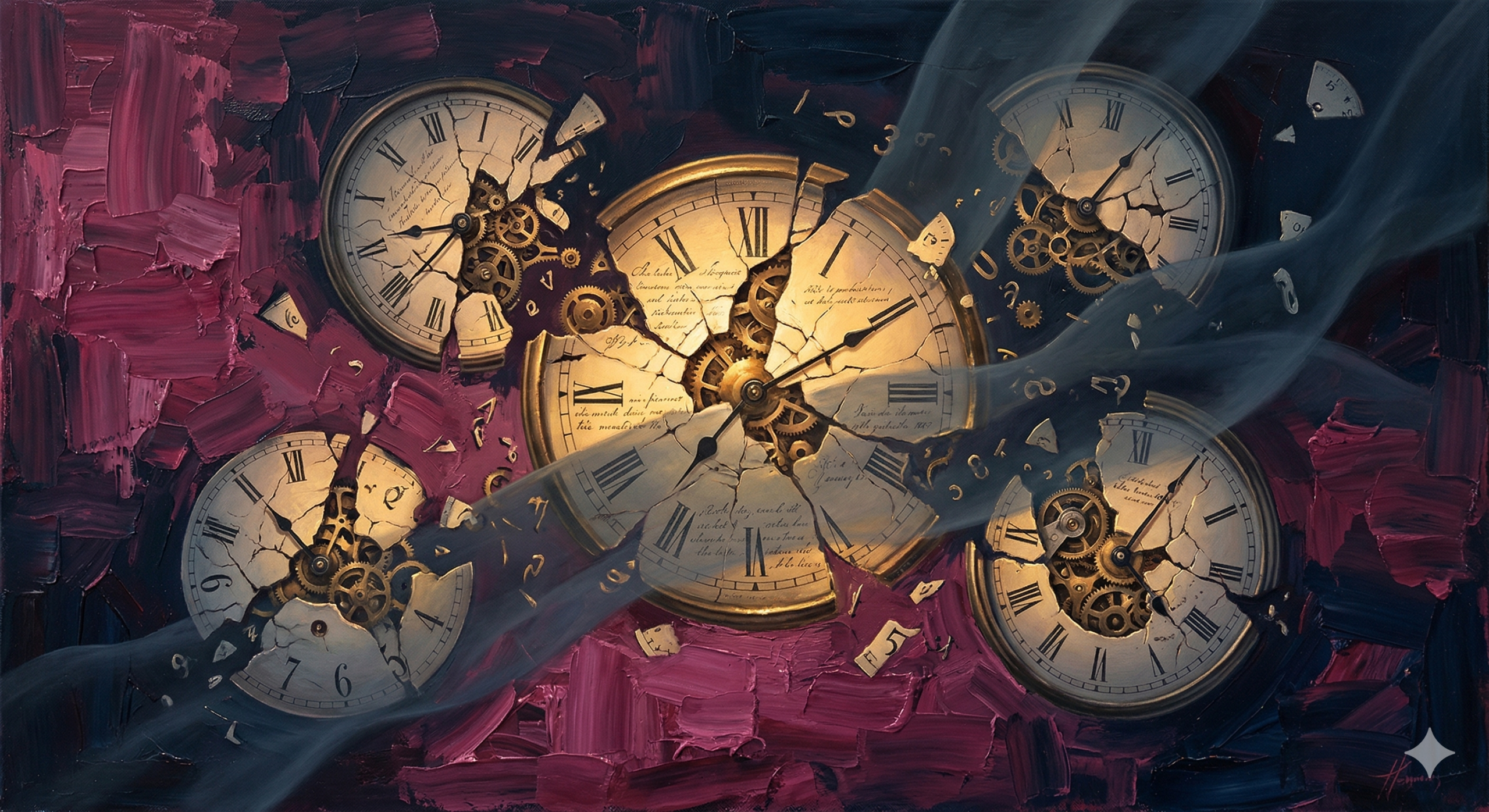
That moment can be terrifying, because survival patterns aren’t just habits. They become identity markers.
For many survivors of sexual abuse, silence, hyper-vigilance, or self-erasure were the ways we kept ourselves alive. Over time, those strategies fused with who we believed ourselves to be.
I came to believe: I am the quiet one. I am the strong one. I am the one who never needs help.
So when healing asks us to loosen those patterns, it can feel like stepping into an identity void.
If I’m not defined by vigilance, by silence, by self-sacrifice, then who am I? It’s not just a question of behavior, but of existence.
What’s happening psychologically is that the “trauma self” has become the dominant narrative. It’s the version of self built around protection.
Letting go of it feels dangerous because the brain equates it with losing the only reliable compass it has ever known.
What often follows is grief. Survivors may grieve not only the childhood or safety they lost, but also the identities they wore to survive.
And that grief is necessary, because it opens space for something new.
When survivors begin to re-author their own story, even in fragments, they begin to loosen the grip of the ‘trauma self.’ This act of narrative reframing is central to how I guide survivors in The Empowering Story process—because writing a new story helps the nervous system and the identity catch up to the possibility of life beyond survival.
Your Protective Patterns Are Not Enemies
The first thing I try to emphasize is that protective patterns are not enemies. They were brilliant survival strategies at one point.
Silence, hyper-vigilance, people-pleasing, even dissociation, all of these once kept us safe when we had very few choices. To shame them or rush to discard them only deepens the wound.
So the work begins with recognition.
I often encourage survivors to pause and ask: What is this pattern trying to protect me from right now?
If, for example, the impulse to stay silent arises when someone is crossing a clear boundary, then silence might still be doing its job, minimizing risk in an unsafe environment.
But if that same silence arises in a supportive group, or in therapy, or in a loving relationship, then it may be a sign the pattern is outdated, protecting against threats that are no longer present.
One way I describe it is: protective patterns are like old bodyguards. They show up in full armor whenever they sense danger.
The question is whether the danger is real or remembered.
The amygdala doesn’t always know the difference, which is why survivors feel such strong responses even in safe spaces.
Neuroplasticity and Trauma Recovery: How Your Brain Heals
When we start creating new safety patterns, we’re essentially asking the brain and body to rewrite scripts that have been rehearsed thousands of times.
Trauma imprints itself not just in memory, but in the wiring of the nervous system. The amygdala becomes hypersensitive, the hippocampus struggles to distinguish past from present, and the prefrontal cortex, the part that makes rational decisions, often gets overridden by survival responses.
When a survivor begins to take small healing steps, speaking a truth, setting a boundary, practicing grounding, the body is running a live experiment: Is this safe? Will I survive this?
If the experience proves safe, the nervous system records it as new data.
Over time, repeated safe experiences begin to strengthen new neural pathways, like fresh trails through a dense forest. That’s neuroplasticity in action.
But here’s why it feels slow and frustrating: those older trauma pathways are deeply grooved, reinforced over years of repetition. The brain defaults to them automatically because they once worked.
Building new safety patterns is like carving out a new road while the old highway is still open. It takes enormous patience and repetition before the new route feels natural.
From the survivor’s perspective, that can feel discouraging. You might think, Why am I still triggered? Why is this still so hard?
But neurobiologically, what’s happening is completely normal.
The nervous system is cautious by design. It doesn’t let go of old survival strategies easily, because its primary job is to keep you alive, not to make you comfortable.
That’s why we say healing is slow work: each new experience of safety, each successful boundary, each compassionate relationship is another brick in a new foundation.
Over time, the balance shifts. The body begins to believe: Maybe it’s possible to live without constant defense. Maybe safety exists here, too.
The Liminal Space
I often tell survivors that this in-between place, the void between the trauma self and the integrated self, is not a sign of failure but of progress.
It feels unbearable because the survival identity, for all its pain, gave structure. To loosen that grip without yet having a new foundation feels like walking on air with no ground beneath you.
But that’s exactly where transformation begins.
I remind them that it takes extraordinary courage to stand in that liminal space without rushing back to the familiar. Our nervous systems hate ambiguity.
They want either the old patterns, which feel predictable, or the certainty of a new identity. To linger in the unknown requires a kind of bravery most people never have to develop.
From a psychological perspective, this is the threshold moment, what some call a “liminal rite.” The old has ended, but the new is not yet born.
It’s deeply unsettling because the brain interprets the absence of identity as danger.
But if you can hold steady, even shakily, you’re already doing the hardest work: proving to yourself that you can survive without clinging to the old narrative.
Why Many Sexual Abuse Survivors Avoid Seeking Help
It’s important to recognize that choosing, or not feeling ready, to step into healing isn’t an isolated struggle.
In achievement-driven cultures where productivity is prized, many survivors are held back by implicit expectations to be “fine.” The data tells us that about 40% of individuals with serious mental health needs never receive help, and stigma plays a major role.
This is especially true in communities where cultural shame or mistrust of mental health systems adds extra layers of resistance.
So, if you’re reading this and feel you’re the only one not “ready,” know that you’re part of a larger, often silent group.
Not ready does not mean not worthy.
The most powerful support we can offer survivors in the “not ready” space is permission, to simply exist as they are, without the demand to perform healing.
Too often, even well-intentioned helpers reinforce pressure: “You should go to therapy.” “You need to let go.” “You’ll feel better once you start.”
Those messages, though meant to encourage, can land as judgment. They imply that survival itself isn’t enough, when in fact survival is already proof of resilience.
Instead, support begins with presence. Just being with someone without requiring change is a profound act of respect.
It communicates: You are not broken for not being ready. You still belong.
Healing Is Not Transactional

On a societal level, we need to shift from a “success-driven” or transactional view of healing, where recovery is measured like an exchange: If I do this, I’ll get better; if I don’t do this, I’ll stay broken.
That mindset creates pressure and fear of failure, as if healing were a contract that can be won or lost.
But healing is not transactional. It’s relational, cyclical, and deeply personal.
Survivors need to know that their worth is not contingent on constant effort or visible progress.
The Empowering Story was built on this same foundation—that healing cannot be reduced to a checklist or a contract. It’s relational, it’s narrative, and ultimately, it’s about finding your way back to love—in its largest sense: belonging, connection, and the hope that you can love and be loved again.
Because here’s the truth: when survivors are freed from both societal pressure and transactional thinking, they often find their own way toward healing more organically.
The absence of pressure itself creates the safety in which hope can quietly begin to grow.
This is why The Empowering Story is not just a program but a philosophy: we honor each survivor’s timing, language, and capacity. Healing is not a race to the finish line; it’s the slow re-claiming of voice, dignity, and belonging.
The Courage You Already Carry
If there’s one truth I want survivors to carry, it’s this: your fear of healing does not disqualify you from healing.
In fact, that fear is part of the journey. It shows just how deeply you understand what’s at stake.
You’re not resisting because you don’t care enough. You’re resisting because you care so much that the thought of disappointment feels unbearable.
The fear of healing more than trauma is not a sign of weakness. It’s a sign of humanity.
It’s your nervous system trying to keep you safe, your identity trying to protect its foundations, your heart trying to shield itself from hope that feels risky.
None of that means healing is impossible.
What I hope you take away is this: healing doesn’t demand that you stop being afraid. It asks only that you allow the possibility that life can be more than survival.
Even if you’re not ready for big steps, even if all you can do today is acknowledge your longing, that’s already part of healing.
At its core, healing is about finding your way back to love, love in a much broader context than the romantic kind between two people. It’s the hope that you can love and be loved again.
Love as safety, as belonging, as connection with yourself and with others. That’s what trauma steals, and that’s what healing quietly restores.
So the insight I’d leave you with is this: courage isn’t the absence of fear; it’s the willingness to exist alongside fear while keeping the door open for hope, and ultimately, for love.
This journey—from naming the past, to coping in the present, to creating a new story of self—is not linear. But it reflects the arc of healing I’ve witnessed in myself and others. At its core, The Empowering Story is about integration, not erasure—about re-authoring your life so that your scars no longer run the show.
If this story resonated with you, I’d love to hear your reflections in the comments below. Or simply take a quiet moment to honor your own story, your own timing, your own courage.
You don’t have to hold it alone. Our free Grounding Companion is a gentle, somatic-based tool (Audio and Ebook) designed to support your nervous system after reading emotionally charged stories.
It’s not a fix—it’s a permission slip to pause, to breathe, and to reconnect with your body in ways that feel safe for you.
👉 https://theeempoweringstory.com/free
You don’t have to walk through that door yet.
Just knowing it’s there is enough.