
Understanding the Difference Between Psychological Labels and True Healing

By Jean Dorff, Trauma Recovery Coach & Founder of The Empowering Story
Article Summary: Despite living in the most psychologically literate era in history, many people feel more fragmented than ever. This article examines why psychological labels””}while initially helpful””}can paradoxically prevent true healing when they become fixed identities. Drawing on research in self-categorization theory, identity foreclosure, and narrative psychology, trauma recovery coach Jean Dorff explains the critical difference between knowing what happened to you and integrating that experience into a coherent life story. Learn why healing happens not through finding the perfect diagnostic label, but through reclaiming your voice and authoring your own narrative.
I can tell you exactly what happened to me. I know the clinical terms. I understand the psychological patterns. I’ve read the books, done the therapy, learned the language.
For years, I could explain my past in impressive detail.
But something still felt unresolved.
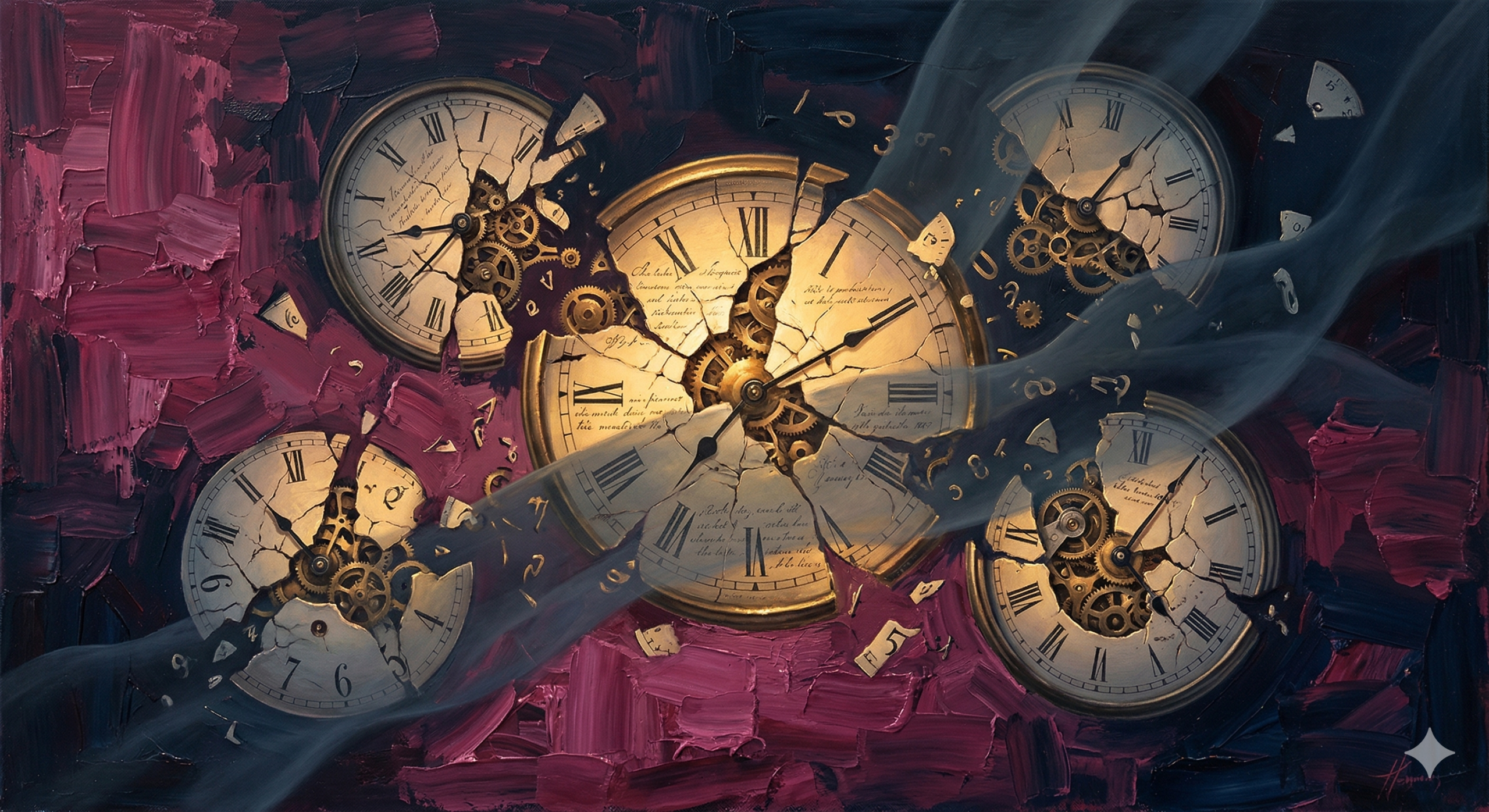
I was speaking about my experience in a way that sounded coherent, but I wasn’t yet fully in it when I spoke. The language had become precise, but also protective. It kept things organized, but at a distance.
This is what I notice when trauma survivors first come to me after years of therapy and self-help work. They often don’t lack understanding. They lack orientation. They can explain their past using precise clinical terminology, but when it comes to locating themselves in the present moment—beyond their trauma identity—there’s a gap.
We live in the most psychologically literate era in history. More people can name their attachment style, identify their trauma responses, and articulate their mental health diagnoses than ever before.
Yet many feel more fragmented than ever.
The reason might surprise you.
When Understanding Becomes a Substitute for Integration
The modern world rewards psychological literacy. You scroll through social media and see people confidently declaring their MBTI type, their Enneagram number, their neurodivergence, their attachment style.
These labels provide something valuable: clarity.
They help you make sense of confusing experiences. They validate feelings you couldn’t name before. They connect you to communities of people who understand.
But somewhere along the way, something shifts.
The language moves from “I experience symptoms of ADHD” to “I am ADHD.” From “I have anxious attachment patterns” to “I am anxiously attached.” From “I survived sexual abuse” to “I am a survivor.”
This linguistic shift is subtle. But it’s psychologically significant.
Self-categorization theory in social psychology demonstrates that once you strongly identify with a category, it shapes your behavior, expectations, and self-perception in ways that extend far beyond the original trait. The label begins organizing your entire personality rather than simply describing one aspect of it.
You interpret all experiences through that single lens. Complexity reduces to diagnostic language. Personal agency weakens.
“This is just how my disorder works.”
“This is what people like me do.”
“I can’t help it. It’s who I am.”
Three Forces Accelerating Label-Based Identity

This didn’t happen by accident. Three cultural forces drive us toward defining ourselves through categories:
Social media rewards simplified identities. Platforms favor clear, condensed self-descriptions. “Empath. INFJ. Trauma survivor. Highly sensitive person.” These labels are easy to communicate and rally around. Nuance doesn’t fit in a bio.
Online self-assessment tools proliferate. You can take a quiz for everything now. Some are scientifically robust. Most aren’t. But they’re entertaining, shareable, and they give you something concrete: an identity badge.
Culture demands distinctive identity markers. We’ve shifted from identity as something largely inherited to identity as something you must actively construct and express. Not having a defining label can feel like invisibility.
The result? People accumulate insights without connecting them into a coherent whole.
We’ve become skilled at naming parts of ourselves. We’ve become less skilled at integrating them into whole narratives.
The Risk of Identity Foreclosure
There’s a term in psychology for this: identity foreclosure.
It describes what happens when you prematurely commit to a particular identity without engaging in meaningful exploration or reflection. You stop at the label. You don’t move through it.
Research in developmental psychology links identity foreclosure to increased risk of substance abuse, impaired relationships, low educational attainment, mental health issues, and self-harm. The premature closure of identity exploration prevents the psychological flexibility necessary for healthy adaptation and growth.
When identity becomes too tightly defined by labels, your capacity for growth and transformation quietly reduces.
I’ve seen this pattern countless times. Someone does years of therapy. They understand their trauma. They know the patterns. But when they try to tell their story, their voice becomes cautious or fragmented.
They’re still organized around the event rather than authors of the story.
What Organized Around the Event Actually Looks Like
When you’re organized around an experience, your language tends to circle it rather than move through it.
You’ll hear accurate description, but it sounds observational. Almost like you’re reporting on yourself rather than speaking from within your experience.
The voice feels cautious, fragmented, or overly structured by psychological terminology. This creates distance rather than connection.
There’s often subtle repetition: the same points, the same framing, without narrative progression or integration.
Emotionally, either everything flattens into explanation, or it comes out in bursts without containment.
Time isn’t clearly integrated. The past feels present. The present is hard to locate in relation to what happened.
The “I” in the story feels unstable: sometimes absent, sometimes overwhelmed, but not fully grounded as the author.
I can read this in someone’s writing. I can hear it in their speech. The system is approaching parts of the experience that haven’t been safely integrated, even though they’ve been cognitively understood.
Why Trauma Survivors Are Particularly Vulnerable
This matters for everyone trying to understand themselves. But it matters acutely for trauma survivors.
When painful experiences become identity categories, healing becomes identity loss.
Think about that for a moment.
If you’ve built your entire sense of self around being a survivor, what happens when you start to heal? Who are you without that identity?
This creates unconscious resistance to the very integration you seek.
Clinical language can absolutely be a step forward. It gives you validation and a framework for understanding. But I often see it become a protective layer rather than a bridge to deeper connection.
When you speak primarily in terms like “this is my trauma response” or “this is my attachment style,” the language is accurate. But it can keep the experience at a distance.
It organizes the story in a way that’s safe and controlled, but not always fully felt or integrated.
The terminology becomes a substitute for voice rather than an entry point into it.
The Moment Language Wasn’t Enough Anymore
I remember the point in my own healing when I realized no additional terminology was going to move me forward.
I needed to enter the story differently. I didn’t need to describe it better.
That shift happened when I started working more directly with narrative and expression. I had to choose my own words rather than rely on established ones.
It was less controlled, but far more integrating.
I sat down and wrote the story in my own words, without relying on any psychological language at all. I wrote it as a lived account: what happened, what I felt, what I didn’t understand at the time.
I noticed how uncomfortable that was. I could no longer hide behind structure or explanation. I had to choose words that actually reflected my experience.
There was a specific moment where I stopped editing for correctness and allowed the writing to be imperfect but real.
That’s when something shifted.
The sentences became less controlled, but more connected. I could feel the difference in my body as I wrote.
What Your Body Knows That Labels Can’t Capture

My body revealed where the story was still unresolved, even though I understood it intellectually.
When I used psychological language, everything felt organized but also somewhat neutral. Almost flattened.
When I started writing in my own words, I could feel tension, hesitation, even resistance in very specific moments of the story.
There were sentences I didn’t want to complete. Words that felt heavy. Parts where my breathing would change or slow down.
That told me exactly where the experience was still active in me.
The body was pointing to what had not yet been integrated.
It also showed me when something did land. There was a sense of release, of coherence, almost like the system settling.
Psychological language gave me understanding. The body gave me feedback on truth and completion.
That combination allowed the story to move from something I knew to something I had actually processed.
Why the System Resists Completing the Story
When you get close to completing a sentence that would fully articulate what happened or what it meant, your body can register that as exposure rather than resolution.
The mind can organize and explain, but the body still holds the original protective response. Its primary function is safety.
That’s where you see hesitation, fragmentation, or a sudden shift back into more abstract or clinical language.
This isn’t resistance in a negative sense. It’s intelligence.
The system is signaling that it’s not yet certain it can hold what is about to be expressed.
I notice this constantly in the people I work with. Those unfinished sentences are exactly where the narrative needs careful attention.
The work isn’t to push through. The work is to create enough internal safety and orientation so you can stay with the experience without being overwhelmed by it.
When that happens, the sentence can be completed—physiologically and emotionally as well as grammatically.
What Creates Internal Safety to Hold Your Own Story
Building that capacity doesn’t come from pushing for more disclosure.
It comes from building orientation first. Helping you know where you are in the moment as you engage with the story.
You move in smaller segments rather than trying to complete the entire narrative at once, so the system doesn’t get overwhelmed.
You pay close attention to signals in the body—breath, tension, pacing—and use those as feedback rather than ignoring them.
You use your own words, at your own rhythm, instead of defaulting to clinical or external frameworks.
You develop containment: the ability to step in and out of the story consciously, rather than being pulled into it.
Over time, this builds a sense that the experience can be approached without losing yourself in it.
Internal safety isn’t the absence of discomfort. It’s the growing confidence that “I can stay with this and remain present.”
Once that capacity is there, the narrative can unfold in a way that integrates rather than destabilizes.
How Narrative Integration Differs From Diagnosis

Research by James Pennebaker shows that structured writing about emotional experiences significantly improves psychological and physical health outcomes.
Students randomly assigned to write about traumas for four days, fifteen minutes a day, ended up going to the student health center over the next six months at about half the rate of students in the control condition.
But here’s what matters: the people who improved used specific language patterns.
They used “I”-focused language to describe their own viewpoint before using “he/she/they”-oriented language and shifting back to “I.” This cycle represents the ability to consider different viewpoints—a key factor in processing difficult experiences.
They also used more cognitive words like “realize,” “think,” “consider,” “because,” and “reason.” These words helped them construct a coherent story, experience insights, and find a path forward.
The people who benefited most were the ones whose writing “began with poorly organized descriptions and progressed to coherent stories.”
Writing forces specificity that vague categories cannot provide.
When you write, you must choose words, connect events, locate yourself in time. Through this process, your mind integrates fragmented experiences into coherent narrative.
The trauma doesn’t disappear. But you gradually move from being defined by the event to understanding how it fits into a larger life story.
That shift changes everything.
The Shift From “I Am” to “This Is Part of My Story”
When someone begins to shift into authorship, the language becomes more coherent, more embodied.
There’s a sense that they are placing the event within their life, rather than placing their life inside the event.
I’ve watched this transformation happen countless times.
Someone who once couldn’t turn their camera on in a one-on-one coaching call eventually becomes a public speaker.
Someone who thought their story was “too much” publishes a book that helps hundreds of others.
Someone who lived in silence for decades finds a voice that connects rather than defends.
What changes first is how they relate to themselves in real time.
They’re less reactive to internal shifts because they can recognize what’s happening without being immediately defined by it.
There’s more continuity in how they experience themselves. Less fragmentation between past and present.
In daily interactions, their communication becomes clearer and more grounded. They’re not subtly adjusting or filtering themselves in the same way.
Decision-making shifts. They’re no longer choosing primarily from protection or avoidance, but from a clearer sense of direction.
Boundaries become more natural, less forced, because they know where they stand.
There’s often a quiet increase in confidence—as stability in their own position, rather than performance.
Relationships tend to become more honest, because they’re no longer relating from a constructed identity, but from a lived narrative.
And perhaps most importantly, their past no longer dictates the frame of every situation.
It becomes part of their story, not the center of their life.
This Applies Beyond Trauma
I see this same pattern outside of trauma, just expressed in a less intense form.
People use labels as a way to gain orientation quickly, but then often stop there, as if the label itself completes the process of understanding.
You’ll see it in personality frameworks, intelligence types, even relational styles. People say, “this is just how I am,” and the exploration quietly ends.
The label gives clarity, but it can also create a fixed reference point that limits further development.
What’s missing is movement. There’s no unfolding narrative, only a category.
In many cases, the person becomes more articulate about themselves, but not necessarily more integrated.
The same distinction applies: describing patterns versus authoring a life.
Without that second step, psychological literacy can actually increase fragmentation, because you accumulate insights without connecting them into a coherent whole.
The Deeper Question Beneath the Label Debate
Are you trying to understand yourself or define yourself?
Understanding invites curiosity, growth, change.
Definition creates boundaries, limits, fixed points.
Labels can help you understand parts of yourself. But they cannot hold the whole of who you are.
When you begin to live inside the label instead of using it as a tool, you risk shrinking your humanity to fit a category that was never meant to contain it.
Viktor Frankl warned that modern individuals risk losing coherent meaning when life becomes overly analytical and self-referential.
Erich Fromm argued that modern freedom produces anxiety about identity, pushing people to adopt roles and labels for stabilization.
But stabilization isn’t the same as integration.
Voice as the True Healing Mechanism

People don’t heal when they find the perfect label.
They heal when they find their voice.
Voice differs fundamentally from identity.
Identity answers “What category do I belong to?”
Voice answers “What truth can only be spoken through my experience?”
This is why The Empowering Story framework—a trauma-informed narrative coaching methodology I developed over two decades of working with survivors—emphasizes narrative integration over diagnosis. Story over category. Authorship over excavation.
When you write your story with intention and structure, something shifts.
You’re no longer explaining yourself. You’re inhabiting your experience as the one who lived it.
You’re reclaiming authorship.
And authorship changes everything.
What Becomes Possible
I’ve worked with women who carried boxes of journals for years, unable to make sense of them.
I’ve worked with survivors who thought their story was “just an attempted assault” and therefore didn’t count.
I’ve worked with people who lived on the streets as teenagers, sold their bodies to survive, and believed they had nothing valuable to offer the world.
Every single one of them found their voice.
Some published books. Some shared their stories in small circles. Some simply wrote for themselves.
But all of them moved from being organized around their trauma to authoring their lives.
The label stopped being the center. The story became integrated.
And that’s when healing truly began.
Your story is waiting. It doesn’t need a better label.
It needs your voice.
Key Takeaways: Labels vs. Narrative Integration
What’s the difference between psychological labels and narrative integration? Psychological labels categorize experiences into diagnostic frameworks (“I am ADHD,” “I am a survivor”), while narrative integration involves processing experiences through personal storytelling that maintains agency and complexity. Labels describe what you are; narratives explore what you’ve experienced and how it shaped you.
Can psychological labels be harmful? Labels aren’t inherently harmful””}they provide valuable clarity and validation. The risk occurs when labels transition from descriptive tools to fixed identities, a phenomenon called identity foreclosure. This can reduce psychological flexibility and create unconscious resistance to growth and healing.
How does trauma affect narrative integration? Trauma survivors often experience fragmented narrative capacity””}they can explain what happened using clinical language but struggle to speak from within the experience. The nervous system holds protective responses that create distance from the story, even when it’s intellectually understood. True integration requires both cognitive processing and somatic resolution.
What is somatic awareness in healing? Somatic awareness involves paying attention to physical signals (breath, tension, pacing) that reveal where experiences remain unintegrated. The body provides feedback that cognitive understanding alone cannot access, pointing to exactly where the story is still unresolved and when integration actually occurs.
How long does narrative integration take? There’s no fixed timeline. Integration happens through gradual developmental sequencing, not force or urgency. The process respects nervous system capacity, moving in smaller segments and building internal safety before deeper exploration. Progress is measured by voice coherence and presence, not speed.
About the Author
Jean Dorff is a trauma recovery coach and founder of The Empowering Story, a narrative-based healing framework that helps trauma survivors move from fragmented identity to integrated authorship. With over 20 years of experience in somatic work and trauma recovery, Jean combines lived experience as a survivor with professional expertise in dance, somatics, and narrative integration. His methodology emphasizes voice development and somatic awareness as pathways to healing, rather than diagnostic categorization. Jean has guided hundreds of survivors through the process of reclaiming their stories and transforming trauma into coherent narrative.